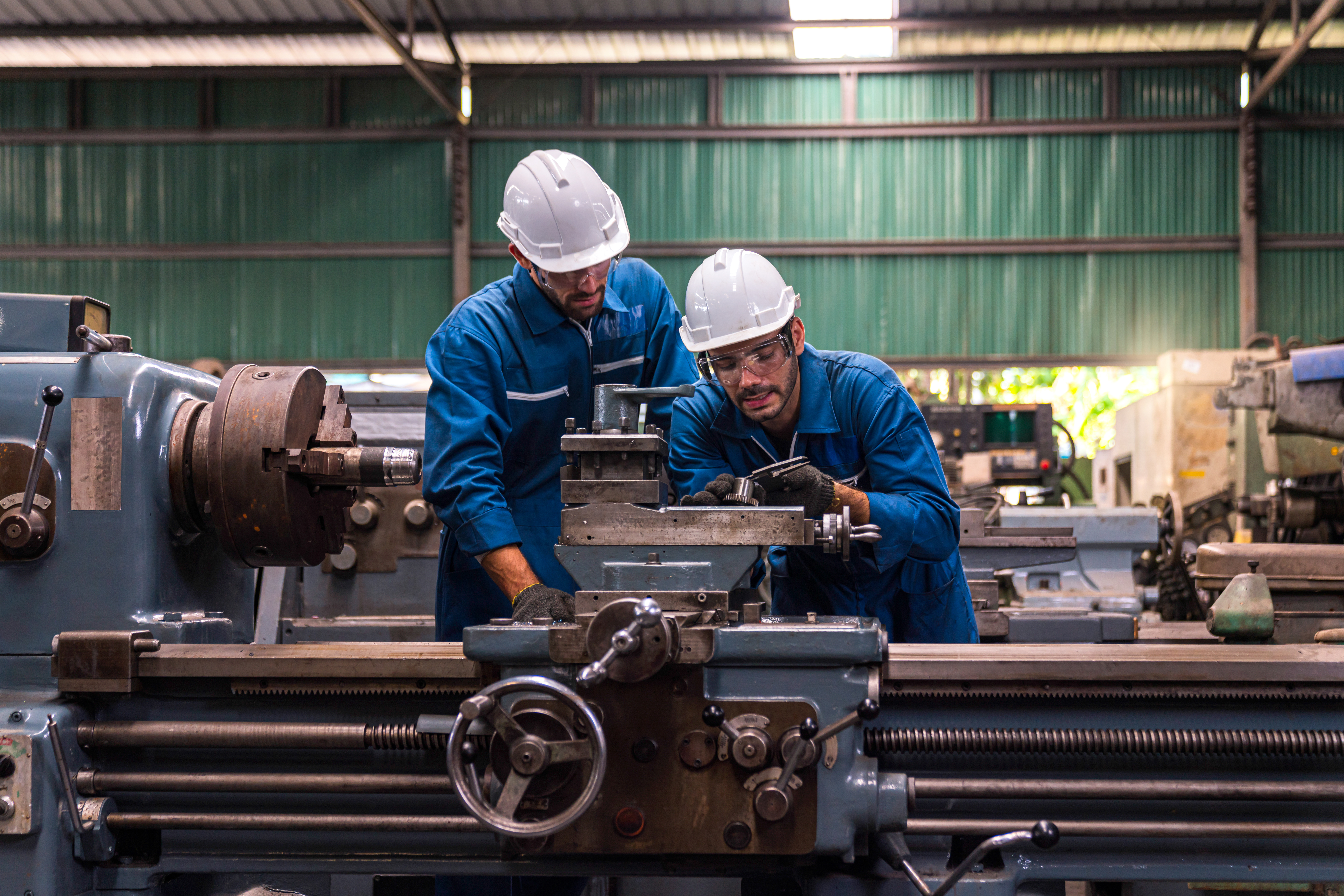


A bearing installed with the wrong fit. A coupling aligned to print tolerances but never verified under operating temperature. A gearbox reassembled by someone who has done it a hundred times, but never with a torque wrench in hand. These are not hypothetical scenarios. They are the kinds of failures that maintenance managers and reliability engineers trace back through their failure logs, month after month, wondering why the same equipment keeps coming back.
The truth is uncomfortable: most industrial assembly and installation failures are not caused by bad people or old equipment. They are caused by inconsistent practices, undertrained craft personnel, and the quiet erosion of technical standards that happens over years of workforce turnover. The result is equipment that underperforms, fails prematurely, and drives up maintenance costs in ways that are rarely traced back to their root causes.
Getting industrial assembly and installation right is not about checklists pinned to a wall. It is about building a maintenance culture where precision is the default, where craft skills are systematically trained and reinforced, and where every technician understands not just what to do, but why it matters.
Why Assembly Quality Is a Reliability Issue, Not Just a Maintenance Issue
Most reliability programs start with data — MTBF trends, failure modes, FMEA outputs. But the analysis often stops short of asking the hardest question: was this equipment installed correctly in the first place?
In facilities where assembly practices are inconsistent or poorly documented, a significant share of what gets logged as a “wear-related failure” is actually an installation-induced failure on a delayed timeline.
Consider rolling element bearings. Studies in the industrial maintenance training literature consistently identify improper installation as one of the leading causes of premature bearing failure, alongside lubrication deficiencies and contamination. When a bearing is driven onto a shaft with a hammer rather than a proper installation tool, the impact force transmits through the rolling elements and damages the raceways before the machine ever runs. The failure that shows up three months later looks like a bearing problem. The root cause is an assembly problem.
The same dynamic plays out across mechanical power transmission: couplings that vibrate excessively because alignment was close enough but not confirmed; V-belt drives that run hot and wear prematurely because tensions were set by feel rather than measurement; bolted joints that loosen under vibration because fastener torque was never verified.
When craft personnel understand how their assembly decisions translate into equipment behavior, they bring a different level of attention to the work. Precision maintenance training is not about turning mechanics into engineers — it is about equipping them with the specific knowledge and skills to do their job at a level that protects asset life.
The Fundamentals of Proper Industrial Assembly
Precision assembly is built on a set of fundamentals that apply across component types and industries. None of them are complicated in concept. What makes them difficult is sustaining them consistently, especially in facilities where pressure to restore equipment quickly pushes back against the time it takes to do the job right.
Cleanliness and Contamination Control
Assembly cleanliness is the first line of defence against premature failure. Dirt, metal particles, and moisture introduced during assembly become abrasives and corrosion initiators inside bearings, gearboxes, and hydraulic systems. The standard in high-reliability facilities is simple: if it is going into a machine, it must be clean, and the work area must be controlled.
| Contamination Control Checklist | |
|---|---|
| ✓ | Designated clean assembly area, not just a cleared-off corner of the shop floor |
| ✓ | Handle components with clean gloves, not bare hands whose oils accelerate corrosion |
| ✓ | Flush hydraulic lines before connection; inspect mating faces for contamination |
| ✓ | Use lint-free cloths, not shop rags, when cleaning precision surfaces |
| ✓ | Store replacement components in sealed packaging until point of installation |
Component Inspection Before Assembly
Every replacement component — whether it came off the shelf yesterday or has been in stores for two years — should be inspected before installation. This is not about distrust. It is about catching damage, misidentified parts, and out-of-spec conditions before they get buried inside a machine.
| Component | What to Check |
|---|---|
| Bearings | Check bore, OD, width vs. drawing; inspect for smooth rotation; verify internal clearance matches application |
| Mechanical Seals | Inspect seal faces for chips or contamination before mounting |
| V-Belts | Verify cross-section matches sheave; inspect for cracking or belt set |
| Couplings | Check for runout, damage, and elastomeric element condition |
Shaft and Housing Fit Verification
Fit conditions — the interference or clearance between a bearing bore and its shaft, or between the bearing outside diameter and its housing — are one of the most commonly overlooked variables in assembly practice. Too much clearance and the bearing creeps on the shaft, generating heat and fretting. Too much interference and the internal clearance closes up, pre-loading the bearing and accelerating fatigue.
Verifying fits requires measuring with calibrated instruments — inside micrometers, outside micrometers, and bore gauges — and comparing measured dimensions to the specified tolerances. Facilities with strong craft skills training programs make dimensional verification a standard step in the procedure, not something left to daily judgment.
Controlled Installation Methods
How a component is installed matters as much as the condition it is in when installation begins. Mounting force should always be applied to the ring being press-fit, never transmitted through the rolling elements. Hammers are not bearing installation tools.
For interference-fit bearings, heating the bearing to expand the bore before installation is far preferable to pressing cold. The temperature limit is critical: above 120°C (248°F), the metallurgical properties of the bearing steel can be altered, reducing rated life. Precision maintenance training teaches technicians not just that induction heating should be used — but how to use it correctly.
Shaft Alignment Best Practices
Shaft alignment is one of the highest-leverage practices in industrial maintenance. It is also one of the most inconsistently executed — and the equipment shows it.
Misalignment puts parasitic loads on bearings, seals, and shafts. A pump running with 10 mils of angular misalignment is not a pump running slightly less efficiently — it is a pump generating bending moments that fatigue the shaft, loading bearings non-uniformly, and accelerating mechanical seal face wear. The cause is almost always traceable to an alignment practice that has not been held to a consistent standard.
Setting the Right Tolerances for the Right Equipment
Not all equipment has the same alignment tolerance requirement. Using generic tolerances across all equipment either drives unnecessary rework on non-critical assets or leaves critical equipment underaligned. Equipment reliability training should include how to select appropriate tolerances based on equipment type, rotational speed, and coupling design.
| Equipment Type | Alignment Guidance |
|---|---|
| Slow-Speed Drives | Wider acceptable tolerances; always check manufacturer tables |
| Centrifugal Pumps | Tighter tolerances; refer to pump manufacturer and coupling OEM specs |
| High-Speed Compressors | Most stringent; thermal growth offsets are often required |
| Documentation Rule | Always record both as-found and as-left values — both matter |
Thermal Growth and Pipe Strain
Cold alignment is a starting point, not a final condition. Equipment that is aligned cold and runs hot will shift as operating temperature changes shaft centerline positions. High-temperature applications require technicians to offset the cold alignment to account for thermal growth, so the machine is aligned at operating conditions rather than at ambient.
Pipe strain is a related issue frequently overlooked during pump installation. When connected piping loads transmit into the pump casing, they distort the casing and shift the shaft centerline — undoing the alignment set before connection. Best practices require checking alignment before and after piping connections and ensuring pipe strain is within allowable limits before commissioning.
Skipping pipe strain verification is a common source of mysterious early bearing and seal failures on newly installed or overhauled pumps. Alignment takes 30 minutes to verify. The failure it prevents takes days to fix.
Best Practices for Torque, Fastening, and Bolted Joint Integrity
Bolted joints fail in two ways: they loosen under vibration and dynamic loading, or they are overtightened, causing the fastener or mating material to yield. Both failure modes are common in industrial facilities, and both are preventable with proper technique and the right tools.
Torque specifications exist for a reason: they are the target clamp load for a given fastener size, grade, and lubrication condition. Applying the correct torque requires a calibrated torque wrench, used correctly — which means pulling steadily to the target value, not impacting it with a wrench or estimating by feel.
| Bolted Joint Best Practices | |
|---|---|
| ✓ | Use calibrated torque wrenches — impact guns are not torque tools for critical fasteners |
| ✓ | Torque multi-bolt flanges in a cross-pattern, in multiple incremental passes |
| ✓ | Specify the lubrication condition explicitly — dry vs. oiled threads change torque-tension relationships significantly |
| ✓ | For high-consequence joints, consider ultrasonic bolt measurement or hydraulic tensioning |
| ✓ | Document as-left torque values as part of the assembly record |
For critical bolted joints — heat exchanger heads, large valve bonnets, and high-pressure flanges — torque is an indirect measure of bolt load. Variables like thread friction, lubricant condition, and surface finish affect how much clamping force a given torque produces. In those applications, ultrasonic bolt measurement or tensioning tools that measure actual bolt stretch give a more reliable indication of joint integrity.
Lubrication Best Practices at the Point of Assembly
Lubrication during assembly is distinct from the ongoing lubrication program. It refers to the decisions made at the moment of installation — and those decisions directly influence whether equipment gets off to a good start or begins its life with a deficit.
Grease-Lubricated Bearings: Getting the Fill Right
For grease-lubricated bearings, the amount of grease used at initial fill is critical. Overgreasing is at least as common as undergreasing and may be more damaging in the short term. A bearing cavity filled with approximately one-third to one-half of grease churns the lubricant rather than distributing it, generating heat and shearing the grease structure.
| Parameter | Guidance |
|---|---|
| Initial Fill Target | Approximately 1/3 to 1/2 of the bearing cavity volume, application-specific |
| Grease Selection | Must match temperature range, speed, load type, and compatibility with existing lubricant |
| Overgreasing Risk | Excess grease generates heat, shears structure, and can blow out seals |
| Re-greasing Intervals | Establish based on bearing size, speed, and environment — document at commissioning |
Thread Lubrication and Torque-Tension Accuracy
The torque-tension relationship for a bolted joint is highly sensitive to the friction coefficient of thread engagement. A fastener specified for dry torque will develop significantly different clamp loads if threads are oiled or coated with anti-seize. Assembly procedures should explicitly specify the lubrication condition, and craft skills training must explain why this matters.
Documentation and Work Quality Verification
In a well-run maintenance organization, assembly work is not complete when the last bolt is tightened. It is complete when the work is documented and verified. This discipline separates maintenance teams that consistently deliver reliable equipment from those that are always reacting to the last failure.
First, operational: a record of as-left conditions gives the next person who works on that equipment a baseline to compare against.
Second, organizational: consistent documentation creates the dataset that lets reliability engineers identify which equipment types recur, which technicians consistently produce the best outcomes, and where training or procedural gaps exist.
Post-Installation Run-In Inspection
Verification steps should be built into the assembly procedure itself, not added as an afterthought. For critical rotating equipment, this typically means a post-assembly run-in inspection — checking bearing temperatures, vibration levels, and seal performance after the first hours of operation and again after any thermal cycle.
| Post-Installation Acceptance Checks | |
|---|---|
| ✓ | Bearing temperature stable within 15–20°C of ambient after 30–60 minutes at load |
| ✓ | Vibration readings within acceptable limits — compare to baseline if available |
| ✓ | No seal leakage beyond allowable threshold |
| ✓ | No unusual noise, looseness, or thermal cycling abnormalities |
| ✓ | All as-left data recorded and filed against the equipment record |
Building Craft Skills That Hold Up Under Production Pressure
The most technically correct assembly procedure means nothing if the people executing it lack the skills to follow it under real working conditions. Craft skills training for industrial maintenance is not a one-time event — it is an ongoing investment in the capability of the people who keep the plant running.
Classroom instruction has its place; it builds the conceptual understanding technicians need to make good decisions when procedures do not cover every situation. But classroom time alone does not build competence. Hands-on practice with real components and real tools, in conditions that mirror actual work, is what converts knowledge into skill.
Knowing the right method is not the same as being able to execute it under real conditions. Our Assembly and Installation training course is built around hands-on practice — technicians work with actual components, real tooling, and the procedures they will use back on the floor. Bearing installation, shaft alignment, bolted joint torquing, contamination control — every module combines the why with guided practice until the skill is solid, not just familiar.
One of the most important and often undervalued aspects of craft skills training is what happens after the course. Without reinforcement in the field, new knowledge fades. Facilities that see lasting improvement from industrial maintenance training programs are the ones that treat training as the beginning of a capability-building process, not the end of it.
Craft mastery and organizational reliability are built the same way: through consistent standards, applied consistently, over time. Reliability is a team sport — ops, maintenance, engineering, and leadership all aligned around the same expectations.
This is where reliability leadership makes the difference. When a manager holds the line on alignment tolerances even when production is pushing for a faster restart, that choice sends a message about what the organization values. When a reliability engineer reviews assembly documentation and provides feedback to the craft team, that reinforces the expectation that the documentation matters.
Making Precision Assembly a Durable Organizational Habit
There is a gap between knowing the right practices and building them into the daily fabric of how a maintenance organization works. Bridging that gap is the central challenge of reliability improvement, and it is harder than the technical side.
Start with procedures. Not generic procedures copied from a manufacturer’s manual, but specific, step-by-step assembly instructions written for the equipment in your facility — with the actual tolerances, tool requirements, and acceptance criteria that apply to your conditions. These procedures need to be accessible — in the shop, on the floor, wherever the work is being done — and used, not just filed.
Layer in verification. Identify which assembly steps require a second set of eyes, co-worker confirmation, supervisor sign-off, or an instrumented check, and build those checkpoints into the workflow. This is not about distrust. It is about creating the conditions where errors get caught before they leave the shop.
Invest in training with follow-through. Precision maintenance training and craft skills development programs are most effective when they are connected to specific on-the-job expectations and followed by field coaching. Reliability is built by teams who practice it consistently — not by individuals who remember a course they took.
Measure alignment as-left values versus tolerance, bearing installation method compliance, and assembly documentation completion rates. These leading indicators give you early visibility into whether your practices are holding up — before the failures tell the story for you.
If you are seeing recurring equipment failures traced back to assembly and installation, the solution is not more procedural documents. It is building genuine craft competence in your team and creating the conditions where that competence gets applied consistently — every shift, every job.
Reliability Solutions works alongside maintenance and reliability teams to develop the skills, procedures, and field habits that make precision assembly the norm rather than the exception. Our practitioners have spent their careers in real facilities, building the kind of capability that holds up under production pressure.
Frequently Asked Questions
The most frequently cited causes are improper installation, inadequate or incorrect lubrication, contamination, and misalignment. Of these, installation errors — particularly using incorrect mounting methods, failing to verify fit conditions, and introducing contamination during assembly — are responsible for a substantial share of early bearing failures. Many failures attributed to “normal wear” are actually installation-induced failures playing out on a delayed timeline.
Start by reviewing your alignment documentation. If as-left alignment values are not being recorded consistently, you cannot evaluate the quality of the work. If records exist, compare as-left values to published tolerance tables for the equipment type and speed. Elevated bearing temperatures, seal failures, and unexplained vibration on recently serviced equipment are practical indicators that alignment quality may be inconsistent.
The correct method depends on the bearing size and fit type. For smaller bearings with a light interference fit, a mechanical installation tool kit that applies force evenly to the bearing ring being press-fit is appropriate. For larger bearings, induction heating to expand the bearing bore before mounting is preferred. The key principle: mounting force must never be transmitted through the rolling elements. Induction heating temperature must not exceed 120°C (248°F) to protect the bearing steel.
Alignment should be checked at every major maintenance intervention that involves disturbing a shaft or coupling, and after any significant process change affecting operating temperature. For critical equipment, an alignment verification during scheduled outages is good practice even if no coupling work was performed — foundation settling, thermal cycling, and piping loads can shift alignment over time.
Basic maintenance training covers procedures at a general level. Precision maintenance training focuses on measurement-based practices and the technical depth required to achieve and verify specific performance standards. It teaches technicians to use instruments rather than estimates, understand the why behind the specification, and recognize conditions that fall outside acceptable parameters.
Assembly quality affects OEE through two primary pathways: unplanned downtime from premature equipment failures, and degraded performance from equipment that runs but underperforms due to elevated vibration, excess power consumption, or reduced throughput. Facilities that track failure root causes systematically often find that a disproportionate share of unplanned downtime traces to installation-related failures.
A well-equipped precision maintenance team needs: calibrated torque wrenches in the appropriate size ranges, a laser shaft alignment system, a bearing installation tool kit (for small-to-medium bearings), an induction heater (for medium-to-large interference-fit bearings), calibrated inside and outside micrometers and bore gauges, and a vibration analyzer for post-installation acceptance testing. Beyond hardware, they need documented procedures specifying when and how these tools are used.
Culture change starts with leadership behavior and standards reinforcement. When managers and supervisors consistently hold the line on assembly quality — reviewing documentation, asking about alignment values, making space for verification steps even under production pressure — the message gets through. Pair that with accessible procedures, the right tools, structured craft skills training with field follow-up, and recognition for work done to the standard.