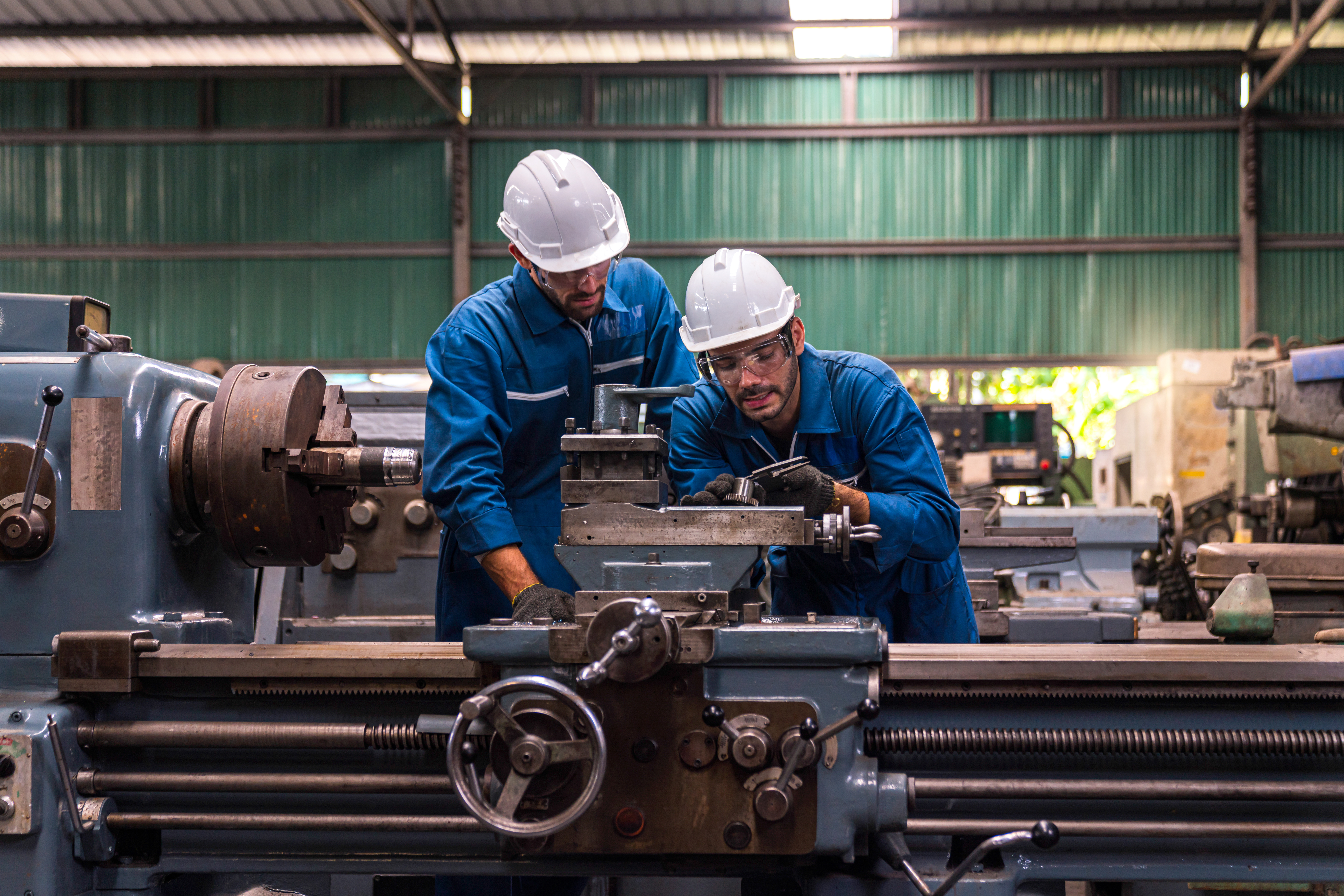


Walk into almost any facility after a major equipment failure, and you will often hear familiar explanations: a defective bearing, a poor-quality component, or unexpected operating conditions. While these factors can contribute to failures, the root cause is frequently much less visible.
Many reliability problems begin long before vibration levels increase or temperatures rise. They often originate during industrial assembly and installation, when small deviations from best practices introduce stress into equipment from the very beginning. These stresses may remain hidden for months or even years before appearing as premature wear or unexpected failures.
Modern industrial equipment is designed to operate reliably when installed within proper limits. However, even well-designed machines can experience shortened service life if installation conditions introduce distortion, excessive load, contamination, or instability. The difference between a machine that runs for decades and one that experiences repeated failures often comes down to how it was installed.
This article presents the ten most common installation mistakes we see in heavy industry, explains why they occur, and shows how precision industrial assembly and installation practices help prevent them.
What Industrial Assembly and Installation Really Means
Before discussing installation mistakes, it is important to clarify what industrial assembly and installation involve. In heavy industry, these terms are often used interchangeably with “setup” or “commissioning,” but in reality, they describe a set of precision activities that directly determine how equipment will perform over its entire service life.
Industrial assembly and installation include two closely related but distinct phases: mechanical assembly and equipment installation. Both must be executed correctly to ensure reliable operation.
Mechanical Assembly
Mechanical assembly focuses on building the machine correctly so that internal loads and clearances match the design intent.
Key elements include:
- Fits – Proper fits between shafts and components
- Bearings – Bearings must be handled and mounted carefully to avoid internal damage.
- Fasteners – Correct tightening practices maintain structural stability.
- Keys – Keys transmit torque between shafts and mounted components.
- Seals – Seals retain lubricant and keep contaminants out.
Installation
Installation focuses on integrating the machine into its operating environment so it can run smoothly and reliably.
Key elements include:
- Alignment – Proper alignment ensures rotating components share the same centerline.
- Base preparation – A stable and flat base prevents distortion of the machine frame and helps maintain alignment over time.
- Mounting – Proper mounting secures the machine and prevents movement during operation.
- Coupling – Correct coupling installation allows torque to be transmitted without introducing unnecessary forces into the system.
Mistake #1 – Poor Base Preparation and Soft Foot
One of most common installation problems in heavy industry begins before alignment tools are even brought out. A machine can only operate as well as the foundation supporting it. When base preparation is neglected, distortion is introduced into the machine structure, often leading to persistent alignment problems and premature component failures.
Uneven Foundations
An uneven foundation prevents the machine from sitting naturally on its base.
Warped or Distorted Baseplates: Baseplates are often assumed to be flat and stable, but this is not always the case.
Shipping distortion: During transportation, baseplates may be exposed to lifting stresses, vibration, or improper handling. These forces can slightly bend or twist the structure.
Improper storage: Baseplates stored on uneven surfaces or without adequate support may gradually deform under their own weight.
Concrete Defects: Even when the baseplate itself is in good condition, foundation problems can create uneven support conditions.
Voids: Air pockets or poorly bonded grout can leave unsupported areas beneath the baseplate.
Cracks: Cracked concrete foundations may shift slightly during operation, changing the support conditions and affecting alignment stability.
Uneven surfaces: Non-level or irregular surfaces prevent uniform contact between the baseplate and the foundation.
Mistake #2 – Soft Foot Errors
Soft foot occurs when one or more machine feet do not sit flat on the mounting surface. When hold-down bolts are tightened, the machine frame is forced into a distorted shape.
Angular Soft Foot: Angular soft foot occurs when the machine foot contacts the base at an angle instead of sitting flat.
Machine frame distortion: When bolts are tightened, the machine frame is pulled downward unevenly.
Frame twisting: The machine structure twists slightly as it is forced to conform to the mounting surface.
Angular soft foot often makes alignment appear acceptable initially, but the machine may move once it reaches operating conditions.
Parallel Soft Foot
Parallel soft foot occurs when a machine foot is uniformly elevated above the base.
Uneven shim stacks: This condition is typically caused by improper shimming or inconsistent shim thickness.
Uneven support: When shim stacks do not provide uniform support, loads are carried unevenly between machine feet.
Induced Soft Foot
Induced soft foot occurs when external forces distort the machine after it has been aligned.
Pipe strain: Connected piping can exert significant forces on pumps and other equipment if not properly supported or aligned.
External forces: These forces pull or push the machine out of its natural position, distorting the frame and changing alignment conditions.
Mistake #3 – Improper Shaft Alignment
Improper shaft alignment occurs when the centerlines of two coupled rotating shafts do not match within acceptable tolerances. Instead of rotating on a common centerline, the shafts operate under offset or angular conditions that introduce additional forces into the machine.
Common Alignment Errors
Even when precision tools are used, alignment problems still occur. The issue is often not the measurement itself, but the assumptions made during the alignment process.
Ignoring Thermal Growth: Machines rarely operate at the same temperature as when they are installed. As components heat up, they expand and shift position. Alignment performed at ambient conditions may not remain correct once the equipment reaches operating temperature.
Ignoring Pipe Strain: When piping is forced into position or inadequately supported, it can apply forces to pumps or other machines.
Incorrect Targets: Using incorrect tolerances or targets can lead technicians to believe a machine is properly aligned when it is not. Alignment specifications must be appropriate for the machine type, speed, and operating conditions.
Mistake #4 – Improper Fastener Tightening
Improper fastener tightening occurs when bolts or fasteners are installed without achieving the correct clamp load required to hold components securely together. Instead of creating a stable joint, the fastener either provides too little tension or excessive tension, both of which can lead to mechanical problems during operation.
Common Errors
Improper tightening practices often result from a lack of controlled procedures or appropriate tools.
Using Impact Guns: Impact tools are frequently used because they are fast and convenient, but they provide little control over the actual tightening conditions.
Dry Threads: Thread condition has a major influence on the relationship between torque and tension.
Incorrect tension: When threads are assembled dry instead of lubricated as specified, friction increases and less tension is generated for a given torque value. This often results in insufficient clamp load even though the specified torque has been applied.
No Torque Specification: In some installations, fasteners are tightened without defined specifications.
Guessing preload: Tightening by feel or experience introduces large variations in bolt tension. Different technicians may apply very different levels of preload depending on their habits or assumptions.
No standardization: Without defined specifications and procedures, tightening practices vary from one installation to another. This lack of consistency makes it difficult to achieve repeatable results or diagnose problems later.
Mistake #5 – Ignoring Pipe Strain
Pipe strain occurs when piping systems apply external forces or moments to connected equipment instead of connecting freely in their natural position. Rather than the piping adapting to the machine, the machine is forced to absorb the resulting stress.
Measurement Errors
Pipe strain problems are often not discovered because they are never measured. Without verification, technicians may assume that piping connections are acceptable when significant forces are actually present.
No Dial Checks: One of the simplest ways to detect pipe strain is to measure equipment movement as piping is connected or disconnected.
No verification: When dial indicators or other measurement methods are not used, there is no objective way to determine whether piping forces are affecting the equipment.
Bolting Pipes Into Position
Another common problem occurs when piping is forced into place to match equipment flanges.
Forced alignment: When piping does not line up naturally, bolts are sometimes used to pull the flanges together. This practice forces the equipment into a distorted position and introduces continuous stress into the machine structure.
Mistake #6 – Poor Lubrication Practices During Installation
Poor lubrication practices during installation occur when components are assembled without the correct lubricant, without adequate lubrication, or without proper cleanliness and handling procedures. These conditions prevent protective lubricant films from forming properly and expose components to unnecessary wear during initial operation.
Assembly Lubrication Errors
Wrong Lubricant: Using the correct lubricant during assembly is essential to ensure compatibility with the operating conditions.
Incorrect viscosity: Lubricants with the wrong viscosity may not form an adequate film between contacting surfaces. If the lubricant is too thin, it may fail to separate surfaces under load. If it is too thick, it may not distribute properly during initial rotation.
Dry Assembly: In some cases, components are assembled without lubrication or with insufficient lubrication.
Metal contact: Without an adequate lubricant film, metal surfaces may come into direct contact during initial rotation. This contact can produce microscopic damage that accelerates wear and reduces component life.
Grease Errors
Grease lubrication is common in many types of industrial equipment, but improper greasing during installation can create problems from the start.
Overgreasing: Applying excessive grease during installation can create undesirable operating conditions.
Heat increase: Excess grease increases internal resistance as rotating elements move through the lubricant. This churning action generates heat and can raise operating temperatures, particularly during the initial run-in period.
Contamination: Maintaining lubricant cleanliness during installation is critical.
Dirt ingress: Dirt or debris introduced during greasing can become embedded in the lubricant and circulate through contact surfaces.
Mistake #7 – Improper Belt Drive Installation
Improper belt drive installation occurs when pulleys and belts are installed without correct alignment or without the proper tension required for stable power transmission. When installation conditions are not controlled, additional forces are introduced into shafts, bearings, and belts that reduce both efficiency and component life.
Belt Alignment Errors
Proper pulley alignment ensures that belts track correctly and transmit power without introducing unnecessary forces into the system.
Pulley Misalignment: Pulley misalignment occurs when pulleys are not positioned in the same plane.
Side loading: Misaligned pulleys force belts to run at an angle, creating lateral forces on shafts and bearings.
Angular Misalignment: Angular misalignment occurs when pulleys are tilted relative to each other rather than remaining parallel.
Belt wear: Angular misalignment causes belts to track unevenly across pulley surfaces.
Belt Tension Errors
Belt tension determines how effectively power is transmitted from the driver to the driven equipment. Incorrect tensioning can either overload the system or reduce its ability to transmit power efficiently.
Overtensioning: Applying excessive tension is a common attempt to prevent slipping, but it often introduces more serious problems.
Bearing overload: Excessive belt tension increases radial load on shafts and bearings.
Undertensioning: Insufficient tension reduces the belt’s ability to transmit torque effectively.
Slip: Belts that are too loose can slip against pulley surfaces, especially during startup or load changes.
Mistake #8 – Contamination During Installation
Installation work frequently takes place in areas where dust, moisture, and debris are present, making it easy for contaminants to enter equipment before it is ever started. Once contamination is introduced into a machine, it is difficult to remove completely.
Open Equipment Exposure
Equipment components are often exposed to the surrounding environment during assembly and installation.
Dust: Airborne dust is one of the most common sources of contamination in industrial installations.
Particle contamination: Fine particles can settle on internal components or mix with lubricants during assembly.
Moisture: Moisture exposure can occur during outdoor storage, transport, or installation in humid environments.
Corrosion risk: Moisture entering bearings or internal cavities can initiate corrosion on metal surfaces
Handling Errors
Contamination is not only introduced by the environment; it is often introduced during normal handling and installation activities.
Dirty Tools: Installation tools frequently come into contact with contaminated surfaces before being used on precision components.
Introduced debris: Dirt, metal particles, or old lubricant residues on tools can be transferred directly into equipment during assembly.
Poor Storage: Components that are not stored properly may become contaminated before installation begins.
Environmental exposure: Bearings, seals, and other precision components left exposed to the environment can accumulate dust or moisture.
Mistake #9 – Improper Fits and Measurement Errors
Improper fits and measurement errors occur when mating components are installed without verifying that actual dimensions meet required tolerances, resulting in interference or clearance conditions outside design limits. When fits are not controlled through accurate measurement, components may operate under unintended stresses or movement.
Lack of Precision Measurement
Precision installation depends on precision measurement. When measurement is neglected or simplified, technicians are forced to rely on assumptions rather than verified conditions.
No Micrometer Use: Accurate measurement tools are required to verify shaft and bore dimensions before assembly.
Unknown tolerances: Without micrometer measurements, actual dimensions remain unknown.
Using Nominal Dimensions: Another common practice is to assume that components match their nominal or design dimensions.
Assumed accuracy: Nominal dimensions shown on drawings or component labels do not guarantee actual dimensions. Manufacturing tolerances mean that shafts and bores can vary within specified limits. Assuming nominal dimensions are correct can result in fits that differ significantly from the intended interference or clearance.
Fit Errors
Incorrect fits create mechanical conditions that may not be immediately visible but can significantly affect equipment performance over time.
Wrong Interference: Interference fits must fall within specified ranges to function correctly.
Incorrect stress: Excessive interference increases stress within components and may reduce internal clearances. Insufficient interference allows movement between mating surfaces.
Thermal Expansion Ignored: Component dimensions change as temperature changes during operation.
Fit changes: Differences in thermal expansion between shafts and mounted components can alter fit conditions at operating temperature.
Mistake #10 – Lack of Installation Documentation and Standards
Even when technicians have strong mechanical skills, installation quality often depends on the consistency of the process. Without clear procedures and documented standards, installation practices vary from one job to another.
No Standard Procedures
When installation work is not guided by standardized procedures, technicians must rely on experience and judgment. While experience is valuable, it does not always produce consistent results.
Tribal Knowledge: In many facilities, installation practices are passed down informally from one technician to another.
Inconsistent methods: Different technicians may use different techniques for the same task, leading to variations in installation quality.
No Checklists: Installation procedures often involve multiple steps that must be completed in the correct sequence.
Steps missed: Without checklists or structured procedures, important steps may be overlooked.
No Baseline Measurements
Baseline measurements provide a record of the machine’s condition at the time of installation. Without these records, it becomes difficult to determine how conditions have changed over time.
No Alignment Records: Alignment work is often completed without keeping detailed records.
No reference: Without recorded alignment values, there is no reliable reference point for future maintenance work.
No Torque Records: Fastener tightening is another area where documentation is often limited.
No traceability: Without torque records, it is difficult to verify whether fasteners were tightened to the correct specifications.
How Precision Industrial Assembly and Installation Prevents These Mistakes
The installation mistakes discussed in this article rarely occur because of defective equipment or poor intentions. Most arise from uncontrolled processes, insufficient measurement, or inconsistent methods. Precision industrial assembly and installation provide a structured approach that helps prevent these problems by controlling the conditions under which equipment is installed.
- Standardized work: Standardized procedures ensure that critical steps such as base preparation, alignment, lubrication, and tightening are performed consistently. When installation methods are standardized, results become more predictable and less dependent on individual technique. This consistency helps reduce variation between installations and improves long-term reliability.
- Measurement accuracy: Precision tools make it possible to measure alignment, dimensions, torque, and other critical parameters with a high degree of accuracy. This level of measurement ensures that installation conditions fall within specified tolerances and that problems can be detected and corrected before equipment is started.
- Skill development: Training develops the knowledge and practical skills required to perform installation tasks properly. Technicians learn how installation conditions affect equipment behavior and how to apply precision methods in real situations. This understanding helps prevent errors that might otherwise go unnoticed.
Conclusion
In many cases, the conditions that lead to failure are introduced during assembly and installation, long before the equipment begins operating. The quality of installation establishes the mechanical conditions under which the machine will operate for years to come.
Installation defines how loads are distributed, how components interact, and how stable the machine remains during operation. Many reliability problems can be traced back to installation practices rather than equipment design.
Improving installation practices often produces significant reliability improvements without requiring major equipment changes. In the end, installation is not just a starting step — it is a defining moment in the life of industrial equipment.
Frequently Asked Questions
What is industrial assembly and installation?
Industrial assembly and installation refer to the process of building and installing machinery so it operates within its intended mechanical limits.
Process of assembling and installing machinery using precision methods
Industrial assembly and installation involve controlled procedures and accurate measurements to ensure that equipment is built and installed correctly from the start.
Precision machine installation
Precision installation focuses on achieving correct fits, alignment, and mounting conditions so that machines operate reliably and efficiently throughout their service life.
Why is proper installation important for industrial equipment?
Proper installation establishes the operating conditions that determine how equipment will perform over time. Even well-designed machines can experience reliability problems if installation conditions introduce unnecessary stress or instability.
What tools are required for precision installation?
Precision installation depends on measurement tools that allow technicians to verify conditions rather than rely on estimates or visual checks. These tools help ensure that equipment is installed within specified tolerances.
Typical tools include:
- Laser alignment tools – Used to measure and correct shaft alignment accurately.
- Torque wrenches – Used to apply controlled tightening to fasteners.
- Micrometers – Used to measure shaft and component dimensions precisely.
- Dial indicators – Used to measure movement and verify mechanical conditions.
- Feeler gauges – Used to measure small gaps such as soft foot conditions.
- Straightedges – Used for basic alignment checks and surface verification.
- Belt tension meters – Used to set proper belt tension.
- Precision requires tools – Accurate installation depends on accurate measurement. Precision tools make it possible to verify installation conditions and achieve consistent results.