


Bearings play a critical role in ensuring the smooth operation of mechanical systems. Bearings are essential machine parts that support moving parts within mechanical systems, reducing friction and enabling efficient motion. However, they are subject to damage over time, specifically impact and oscillatory damage. This can lead to significant consequences, including equipment downtime, repair costs, and even threats to safety through catastrophic damage.
However, bearings and their condition are often among the lowest priorities. It’s quite common for bearings to be damaged by:
- Dropping bearings
- Impacting an interference fit fitment, such as a coupling hub, that’s seized onto a shaft
- Beating a bearing onto a shaft or into a housing
- Striking a machine with a hammer to move it instead of jacking it and approaching it correctly
- Not caring for the condition of spare machines, such as leaving them for years without rotations or in improper environments
- Improper handling during or after manufacture, which can also contribute to early bearing damage
The Deterioration of Bearing Conditions

Poor care and maintenance accelerate bearing deterioration and reduce their lifespan. Deteriorated bearings can compromise the accuracy and performance of machinery, especially in high-precision applications. Though they might not receive the same consideration as other equipment and parts, bearings that fail prematurely and require replacement or contribute to greater machine damage are a significant cost that is also largely avoidable.
These effects can be noticed when these signs of bearing damage are observed:
- Visible Wear: Bearings might show signs of surface damage, including pitting and spalling.
- Excessive Vibration: Higher vibration levels can indicate that the bearing is overly worn or the equipment is misaligned.
- Unexpected Noises: Noises such as knocking, grinding, or squealing can be signs that a bearing is damaged.
- Increased Temperatures: Where bearings are overheating, it can signal insufficient lubrication, leading to metal-to-metal contact and excessive friction.
Next, we’ll examine different types of common bearing damage and how to prevent it.
What Is Brinelling?
Brinelling occurs when excessive force or pressure is applied to a bearing’s hard surface, causing permanent indentation. This damage typically appears as small, evenly spaced dents that correspond to the diameter of the balls or rolling elements within the bearing. The dents form on the raceway or other hard surfaces, and their size matches the diameter of the balls or rollers. Brinelling can be caused by improper installation techniques, such as applying too much force or hammering bearings into place, or from heavy impact during transportation or operation. The materials used in bearings influence their susceptibility to brinelling, as different materials have varying hardness and resistance to indentation.
There are two types of brinelling: true brinelling and false brinelling. True brinelling results from high static loads or impacts, while false brinelling is caused by vibrations acting on a stationary bearing, often due to poor handling or storage practices.
Fun fact : Brinelling is named after the Brinell scale of hardness, which measures the hardness of materials by indentation using a preset level of force.
In both cases, the damage creates stress risers that can lead to premature bearing failure if not addressed. Understanding how to identify and prevent brinelling is essential to preserving equipment life and avoiding costly downtime.
Recognizing and Preventing Common Bearing Damage Types
True Brinelling
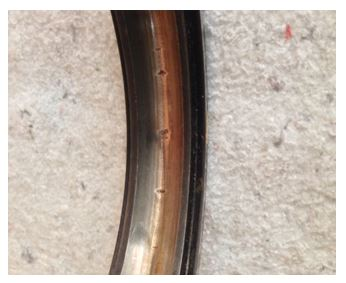
True brinelling is the indentation caused by shock or excessive loads due to improper mounting, handling, or dropping of machinery. This type of damage occurs when the force or pressure applied to the bearing exceeds the elastic limit of the ring or bearing material.
If you’re looking to define brinelling, it’s when metal is displaced due to contact stress, such as when the rolling element strikes the raceway surface. When the bearing is in use, the damaged area will become an outlier for further stress, leading the impacted areas and potentially other parts in contact with the bearing to spall/flake prematurely.
Proper fitting eliminates the need for hammering and minimizes impact during transportation. To prevent true brinelling during mounting, always apply slow and even pressure to the correct part of the bearing. Using the correct installation tools, including bearing heaters, and practicing precision installation techniques, such as measuring shaft and housing fits correctly, also minimize brinelling damage. Additionally, specifying a bearing with enough capacity to handle the desired load, including both axial loads (along the shaft’s axis) and radial loads, helps prevent brinelling from excess force or pressure. Improper direction or excessive force during installation or operation can contribute to brinelling and reduce bearing life.
False Brinelling

False brinelling is the rubbing action leading to metal-to-metal contact, e.g., between the rolling element and the raceway surface. False brinelling occurs due to vibration and oscillatory movement, leading to similar indentations as true brinelling but without excessive load. This is caused by vibration or an oscillatory source acting on the bearing or machine while stationary. During operation, the bearing surfaces are protected by the oil film of the lubricant. However, this film cannot be maintained and regenerated when stationary. Once the film has been removed, metal-to-metal damage occurs.
The vibratory action between the rolling element and the raceway surface creates axial lines. If the bearing remains in that position long enough, it will create hollow spots. False brinelling can create divots in the material from wear, along with the formation of metal particulates and debris. Similar to true brinelling, when active in use, the damaged areas act as stress risers, and fatigue failures ensue. These components are considered brinelled, and continued use can accelerate bearing failure.
False brinelling can be avoided by reducing the oscillatory source and vibration. During transport, shafts on machines should be secured. Circulating fresh grease and ensuring periodic rotating of spare bearings can help prevent false brinelling, especially in applications like wind turbine pitch bearings, where turbines experience minimal rotation and oscillatory movement. Spare parts should be rotated in and out of service.
Material Contamination
Contamination of a machine or mechanical system happens when dirt, dust, debris, or shavings enter into the bearing housing. These cause significant abrasion and wear, leading to premature failures, potential sparking and obstruction of movement. The solution to contamination is to ensure that seals and covers are intact, always use clean tools, and clean housing and bearings during scheduled maintenance.
Improper Installation
Machines and mechanical systems that are not installed with proper equipment, planning, and installation techniques lead to misalignment, uneven load distribution, and repetitive wear on bearings and housing. This can be prevented by ensuring proper tools and techniques are used and by following manufacturers’ guidelines so that equipment fits flush and has proper alignment.
Inadequate Lubrication
Lubrication is vital for bearings to ensure smooth movement and rotation while minimizing friction and wear from metal-to-metal contact. Significant damage can occur when insufficient lubrication or the wrong lubricant, such as grease, is used. This can be prevented by regularly checking and maintaining lubrication levels and using the lubricants recommended by the bearing manufacturer.
Material Fatigue
Fatigue can occur in equipment and machinery using bearings, as well as in the bearings themselves, where repeated stress cycles, such as those brought about by misalignment, lead to repetitive strain, cracks, and spalling. To prevent material fatigue, install bearings rated for their intended use, regularly inspect them for signs of wear, and replace end-of-life units.
Detection and Diagnosis of Bearing Damage
Detecting and diagnosing bearing damage is essential for preventing premature bearing failures and ensuring the reliable operation of machinery. Bearings, whether they are ball bearings, rollers, or self-aligning ball bearings, are subject to a range of stresses and operating conditions that can lead to various forms of damage, including brinelling, wear, and surface fatigue.
One of the most effective ways to detect bearing damage is through regular monitoring of machine vibration, noise, and temperature. Excess vibration can quickly lead to other forms of wear and damage on the rolling elements, such as the inner ring, outer ring, and contact surfaces. Unusual noises can indicate that the bearing is experiencing improper operation or that the lubricant film has broken down, allowing metal-to-metal contact. Temperature spikes may signal insufficient lubrication or excessive load, both of which can accelerate wear and lead to permanent indentation or Brinell marks on the bearing surfaces.
To prevent premature failure, it is crucial to follow best practices for mounting, lubrication, and maintenance. Selecting the right bearing material with high Brinell hardness and low friction properties, ensuring proper alignment, and using the correct lubricant for the application can all help extend the life of the bearing. Regular inspections and monitoring, combined with a solid understanding of the different forms of bearing damage, will help operators quickly identify issues and take corrective action before they escalate.
In summary, the detection and diagnosis of bearing damage require a comprehensive approach that includes monitoring machine condition, inspecting bearing components, and understanding the effects of loads, vibration, and lubrication.
Conclusion
Bearings are integral to many machines, mechanical systems, and industrial processes, yet their maintenance is often overlooked. Bearing damage can have a major impact on equipment downtime, repair costs, and even the health and safety of operators. Some of the most significant types of bearing damage include true and false brinelling, contamination, improper lubrication, and material fatigue.
These issues can be prevented by following proper guidelines for transporting and installing equipment, checking for alignment issues, and maintaining lubricant levels. Choosing the right bearings that are fit for purpose and replacing end-of-life bearings is also important.


