


By Yoann Urruty
There’s a gap on most plant floors that no one talks about enough. Reliability engineers and operations teams both want the same thing: equipment that runs, production targets that get hit, and fewer 2 a.m. phone calls. But the way they see the world is often completely different, and that difference costs plants more than they realize.
This article is an honest attempt to bridge that gap. If you work in operations, read this with an open mind. If you’re a reliability engineer, feel free to forward it.
1. Maintenance Isn’t the Enemy of Production

Operations teams are wired around output. Tons per hour, units per shift, OEE. That’s the job. So when maintenance shows up and asks to take a critical asset offline for scheduled work, it can feel like an attack on the numbers.
Here’s the reality: that planned downtime is almost always shorter, cheaper, and less disruptive than the unplanned kind.
A planned bearing replacement might take two hours. The same bearing failing mid-shift can take eight hours of reactive work, plus parts expediting, plus rescheduling downstream. The math is not complicated.
Every hour you protect from planned maintenance, you’re borrowing against a much longer outage down the road.
Operations and reliability need to negotiate planned work together, not treat it as an inconvenience. Plants that do this well consistently outperform those that treat maintenance as a disruption.
2. The CMMS Is Only as Good as What Goes Into It

Reliability engineers rely on data. Asset history, failure codes, work order documentation, parts consumption. All of that feeds into decisions about maintenance frequencies, spare parts stocking, and root cause investigations.
When a technician closes a work order as ‘repaired’ with no notes, or when failure codes get selected at random to get the ticket closed, the entire data foundation starts to crack.
Operations often controls how work orders get completed in the field. That’s a significant amount of power over the quality of the reliability program, whether they realize it or not.
Garbage in, garbage out is a cliché because it’s true. Reliability decisions are only as good as the work order history behind them.
Common data quality issues that reliability engineers deal with daily:
- Work orders closed with no description of what was found or what was done
- Incorrect failure codes selected to speed up the close-out process
- Asset IDs entered wrong, making failure history impossible to trace
- Parts consumed not recorded, leaving inventory blind spots
- Symptom descriptions so vague they can’t be used for future diagnosis
The CMMS isn’t the issue. The habits around closing work orders are, and fixing them requires cultural buy-in, not a software upgrade.
3. Lubrication Is Precision Work, Not a Grease Gun Free-for-All
A grease gun and a route sheet aren’t a lubrication program. Without specified quantities, intervals, and lubricant types, you’re introducing variability into a process that punishes variability.
Overgreasing is one of the most common causes of premature bearing failure in industrial facilities. It increases heat, displaces grease from the contact zone, and can even damage seals. The bearing doesn’t care that someone was trying to help.
A proper lubrication task specifies the lubricant type, the delivery method, the quantity in grams (not ‘a few pumps’), the interval, and the condition indicators to watch for before and after. That level of detail matters.
More grease is not better grease. Precision is what protects bearings, not enthusiasm.
When operations staff or untrained technicians perform lubrication tasks without that specification, they’re introducing risk, not reducing it. Reliability engineers aren’t being territorial when they push for trained, certified lubrication technicians. The equipment genuinely performs better when lubrication is treated as skilled work.
4. Condition Monitoring Data Needs a Response, Not Just a Report
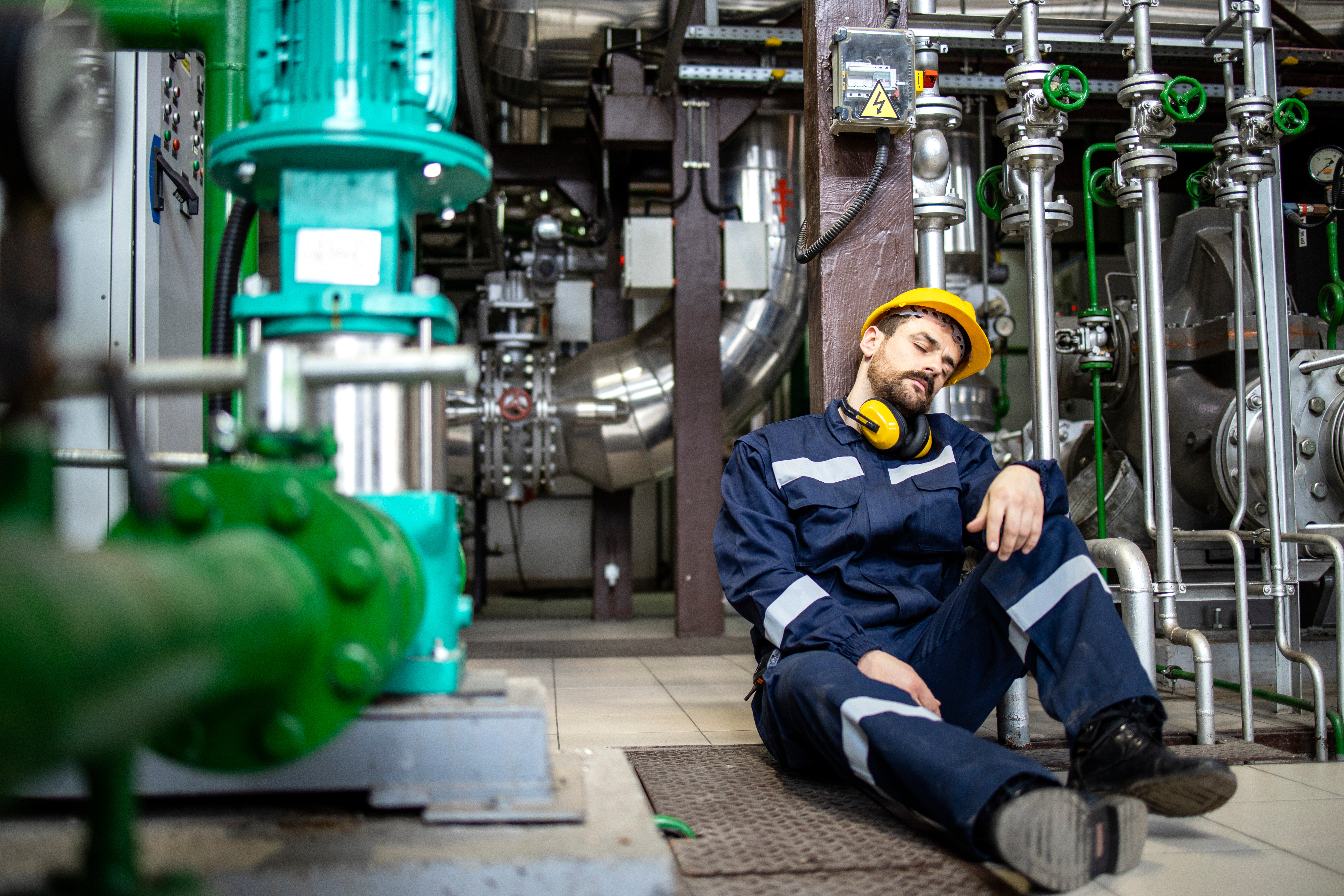
Plants invest real money in predictive maintenance programs. Vibration analysis, oil analysis, infrared thermography, ultrasonic inspection. These technologies are effective when they’re used correctly, which means acting on what they find.
The breakdown happens at the handoff. A vibration analyst flags an elevated fault frequency on a pump bearing and submits a report. The report goes to a planner, maybe to an operations supervisor. And then… the pump keeps running because ‘it’s still making product.’
Three weeks later, the bearing seizes.
This scenario plays out constantly, and it’s not because the technology failed. The data was right. The timing was right. The response was wrong.
| Scenario | Typical Cost Range |
|---|---|
| Planned bearing replacement (caught by vibration analysis) | $800 – $2,500 |
| Reactive bearing failure with production loss (4-8 hrs) | $15,000 – $60,000 |
| Reactive bearing failure with secondary damage | $40,000 – $150,000+ |
Operations teams need to understand that a condition monitoring finding is a recommendation with a deadline. Treating it as optional, or as something to get to eventually, eliminates most of the value the program was designed to deliver.
When reliability flags an issue, the right question from operations is ‘when does this need to happen?’ not ‘do we really need to do this now?’
5. Reliability Is a Team Sport, and Operations Plays a Bigger Role Than They Think
Reliability engineers can design great maintenance strategies, optimize PM tasks, implement condition monitoring, and build solid asset hierarchies. What they can’t do is control how equipment gets operated every day.
Operating outside of designed parameters is one of the leading contributors to premature equipment failure. Running a pump against a closed valve. Pushing a conveyor beyond its rated load. Ignoring abnormal sounds or smells because the shift is almost over.
None of those decisions show up in a maintenance report. But they all show up in failure rates.
The most reliable plants treat operators as the first line of defense in asset health. Some of the best examples of this are facilities that have implemented structured operator rounds, where production staff do brief, documented checks during their shifts and flag early warning signs before they escalate.
Here’s what a culture of shared ownership actually looks like in practice:
- Operators report unusual sounds, vibrations, leaks, or temperature changes before they’re serious
- Production supervisors participate in criticality ranking discussions and PM planning reviews
- Downtime decisions include input from both operations and reliability, not just one side
- KPIs are shared across departments, so both teams are accountable for asset availability
- New equipment startups involve reliability engineers before, not after, commissioning
That last point deserves its own article. (Seriously. Reliability engineers getting looped in after equipment is already running is a painful and very common problem.)
Closing the Gap Starts With Honest Conversation
Reliability engineers and operations teams don’t need to agree on everything. They do need to understand each other’s constraints.
Operations is under pressure to produce. Reliability is under pressure to protect assets for the long term. Those pressures are real, and they pull in different directions. The plants that figure out how to align them, through shared KPIs, joint planning sessions, and genuine mutual respect, are the ones that consistently outperform.
If you’re in operations and you made it this far: the reliability team isn’t trying to slow you down. They’re trying to make sure you don’t lose three days of production next quarter because of something that was predictable and preventable today.
That’s a goal worth sharing.

